Train Travel
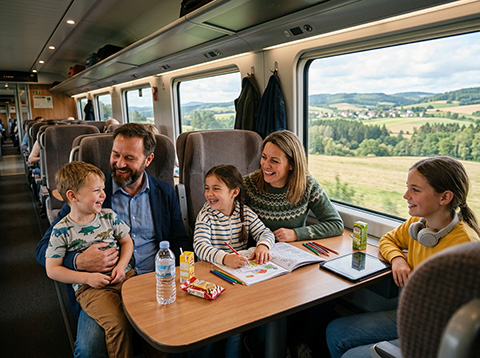 Traveling by train can be a comfortable, efficient, and cost-effective alternative to driving, especially for commuting or traveling between cities. Train passengers can relax, read, work, or use electronic devices instead of concentrating on traffic, making travel time more productive and less stressful. Rail transportation also eliminates concerns about fuel costs, parking fees, vehicle wear and tear, and long hours behind the wheel. In many areas, trains are a reliable way to avoid highway congestion while reducing environmental impacts through lower emissions per passenger than individual automobiles. When combined with walking, cycling, or local transit, train travel can provide a convenient transportation option that saves money, reduces stress, and offers a safe and comfortable journey.
Helpful Tips
If you're traveling by train, a little preparation can make the trip more comfortable, efficient, and enjoyable.
Here are some helpful tips:
• Book early. Many rail systems offer lower fares for tickets purchased well in advance.
• Arrive early. Getting to the station 20–30 minutes before departure gives you time to find your platform and board without rushing.
• Travel light. While trains generally allow more luggage than airplanes, packing only what you can comfortably carry makes boarding and transfers much easier.
• Keep valuables with you. Carry your wallet, passport, phone, medications, and electronics in a small bag that stays with you at all times.
• Bring entertainment. Books, music, podcasts, or downloaded movies can help pass the time, especially on longer journeys.
• Pack snacks and water. Many trains offer food service, but bringing your own snacks can save money and ensure you have something you enjoy.
• Dress comfortably. Wear layers since train temperatures can vary throughout the trip.
• Take advantage of the space. Long-distance trains often allow passengers to get up and walk around, which can improve circulation and reduce stiffness.
• Charge your devices. Many modern trains have power outlets or USB ports, but it's still wise to begin the trip with a full battery and carry a portable power bank.
• Know your stops. If your trip includes transfers, familiarize yourself with station names and connection times before departure.
• Watch your belongings. Although train travel is generally safe, keep an eye on your luggage when boarding, leaving your seat, or arriving at stations.
• Respect other passengers. Use headphones for music or videos, keep conversations at a reasonable volume, and avoid blocking aisles with luggage.
• Consider scenic routes. Many rail lines pass through landscapes that are difficult to see by car or airplane, making the journey part of the travel experience.
• Plan local transportation. Before arriving, determine how you will reach your final destination, whether by bus, subway, taxi, ride-share, bicycle, or on foot.
Train travel offers a unique combination of comfort, convenience, and efficiency. Unlike driving, passengers can relax, read, work, or simply enjoy the scenery while someone else handles the journey. For many people, it provides a pleasant balance between the speed of air travel and the flexibility of automobile travel, especially when traveling between cities.