Motor Scooters
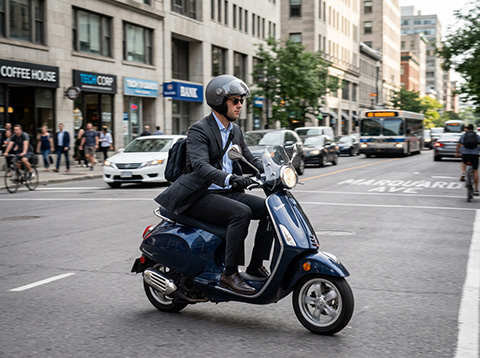
A motor scooter can be an economical and practical way to commute to work, especially for short to moderate distances in urban and suburban areas. Compared with driving a car, a scooter typically uses much less fuel, reducing transportation costs while also producing fewer emissions. Scooters are generally easier to park, can help riders avoid some traffic congestion, and often require less maintenance than a full-sized automobile. In addition to saving money, riding a scooter can make the daily commute more enjoyable by allowing riders to spend more time outdoors. To maximize safety, riders should always wear a DOT-approved helmet, protective clothing, and bright or reflective gear, remain alert to surrounding traffic, and operate the scooter defensively in all weather and road conditions.
Things to Consider
Choosing a motor scooter can be an excellent way to reduce commuting costs, but it is important to select one that matches your intended use. If your commute is primarily on city streets with speed limits under 45 mph, a 125cc to 200cc scooter is often sufficient and offers excellent fuel economy. For routes that include highways or sustained speeds above 55 mph, a 250cc to 400cc model generally provides better performance and safety by allowing you to keep up with traffic. Before purchasing, sit on several models to ensure the riding position is comfortable and that you can place both feet securely on the ground.
New riders should invest in quality safety gear before spending money on accessories. A DOT-approved or Snell-certified full-face helmet, riding jacket, gloves, sturdy over-the-ankle footwear, and long pants can greatly reduce the risk of injury. Completing a motorcycle safety course is highly recommended, as most programs teach scooter riders the same defensive riding techniques used by motorcyclists. Be sure to practice emergency braking, cornering, and low-speed maneuvering in an empty parking lot before riding in traffic.
Consider the total cost of ownership rather than just the purchase price. Compare insurance rates, fuel economy, maintenance requirements, tire replacement costs, and the availability of local dealers and service. Look for practical features such as under-seat storage, a luggage rack, windscreen, and anti-lock braking system (ABS), which can improve both convenience and safety. Finally, remember that weather can affect year-round commuting, so having rain gear and an alternate transportation plan for severe weather is a wise part of owning a scooter.