Motorcycle Commute
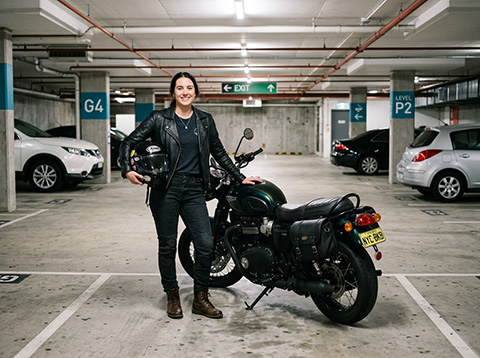 Commuting to work 5 miles by motorcycle can provide an excellent balance between the low operating costs of a bicycle and the convenience of an automobile. Motorcycles typically achieve much better fuel economy than most cars, require less parking space, and often cost significantly less to purchase, insure, and maintain than a typical passenger vehicle. Their smaller size can make navigating congested traffic easier in some areas, potentially reducing commuting time. Motorcycles also produce fewer emissions and consume fewer resources than larger vehicles. For people with moderate commuting distances, a motorcycle can be a practical and economical transportation choice that offers greater speed and comfort than a bicycle while still providing substantial savings over driving a car. Riders should, however, always wear appropriate protective gear, remain highly visible to other motorists, and ride defensively to maximize safety.
Typical Annual Cost
Bicycle $250–800
300 cc motorcycle $1,200–3,000
Average automobile $5,500–8,800
A typical annual cost for a 300 cc motorcycle includes:
• Depreciation: $500–1,200
• Insurance: $200–800 (varies greatly by rider age, experience, and location)
• Fuel: $40–70 (at roughly 65–80 mpg for 2,500 miles)
• Maintenance and tires: $250–600
• Registration and licensing: $100–300
Compared with an automobile, a 300 cc motorcycle can reduce commuting costs by roughly 50–80%, while using only a fraction of the fuel and requiring less parking space. Compared with a bicycle, however, it is still several times more expensive to own and operate.
For a 10-mile daily commute, the three options generally compare like this:
• Bicycle: Lowest cost and provides exercise, but weather and physical effort are factors.
• 300 cc motorcycle: Low operating cost, quick commute, excellent fuel economy, but requires insurance, licensing, and protective gear.
• Automobile: Highest cost, but offers the greatest comfort, cargo capacity, and weather protection.
For someone commuting only 5 miles to work, a 300 cc motorcycle is often considered one of the most economical motorized transportation choices, especially if highway speeds are not required.
.
Safety
Motorcycle riders can significantly reduce their risk of injury by adopting safe riding habits and wearing proper protective equipment every time they ride. Always wear a properly fitted, DOT-approved helmet, along with eye protection, gloves, a protective jacket, long pants, and sturdy over-the-ankle boots. Ride defensively by assuming that other drivers may not see you, maintaining a safe following distance, and avoiding lingering in another vehicle's blind spots. Obey speed limits, use your turn signals, and keep your headlights on, even during the day, to improve visibility. Regularly inspect your motorcycle by checking the tires, brakes, lights, fluid levels, and controls before riding. Avoid riding while fatigued or under the influence of alcohol, drugs, or medications that impair judgment. Finally, continue developing your riding skills through practice and advanced rider training, as experience combined with good judgment is one of the most effective ways to make every ride safer.