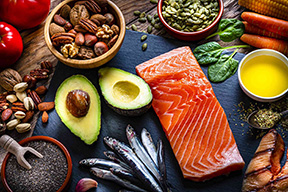
Healthy fats are a necessary part of a balanced diet because they support vital bodily functions and contribute to overall well-being. Unlike unhealthy trans fats or excessive saturated fats, healthy fats—such as those found in avocados, nuts, seeds, olive oil, and fatty fish—help the body absorb essential vitamins like A, D, E, and K. They also provide long-lasting energy, support brain function, and aid in maintaining healthy skin and hormones. Including the right types of fats in our diet can even help reduce the risk of heart disease by improving cholesterol levels. Rather than avoiding fats altogether, choosing healthy sources in moderation is key to nourishing the body and promoting lasting health.
Current dietary guidelines emphasize favoring unsaturated fats while limiting saturated and avoiding trans fats. A practical balance for most healthy adults is:
• Total fat: 25% of daily calories.
• Monounsaturated fats: About 40% of total. Sources include olive oil, avocados, almonds, and peanuts.
• Polyunsaturated fats: About 30% of total, including omega-3 fats from fatty fish, walnuts, flaxseed, and chia seeds.
• Saturated fats: 30% of total. Sources include butter, high-fat dairy, fatty meats, and tropical oils.
• Trans fats: As close to zero as possible, since they increase the risk of heart disease.
For someone consuming 2,000 calories per day, this translates to roughly 44–78 grams of total fat, with most of that coming from olive oil, nuts, seeds, fish, and other plant-based sources. A simple guideline is to think of your fat intake as mostly unsaturated fats, a small amount of saturated fats, and virtually no trans fats.
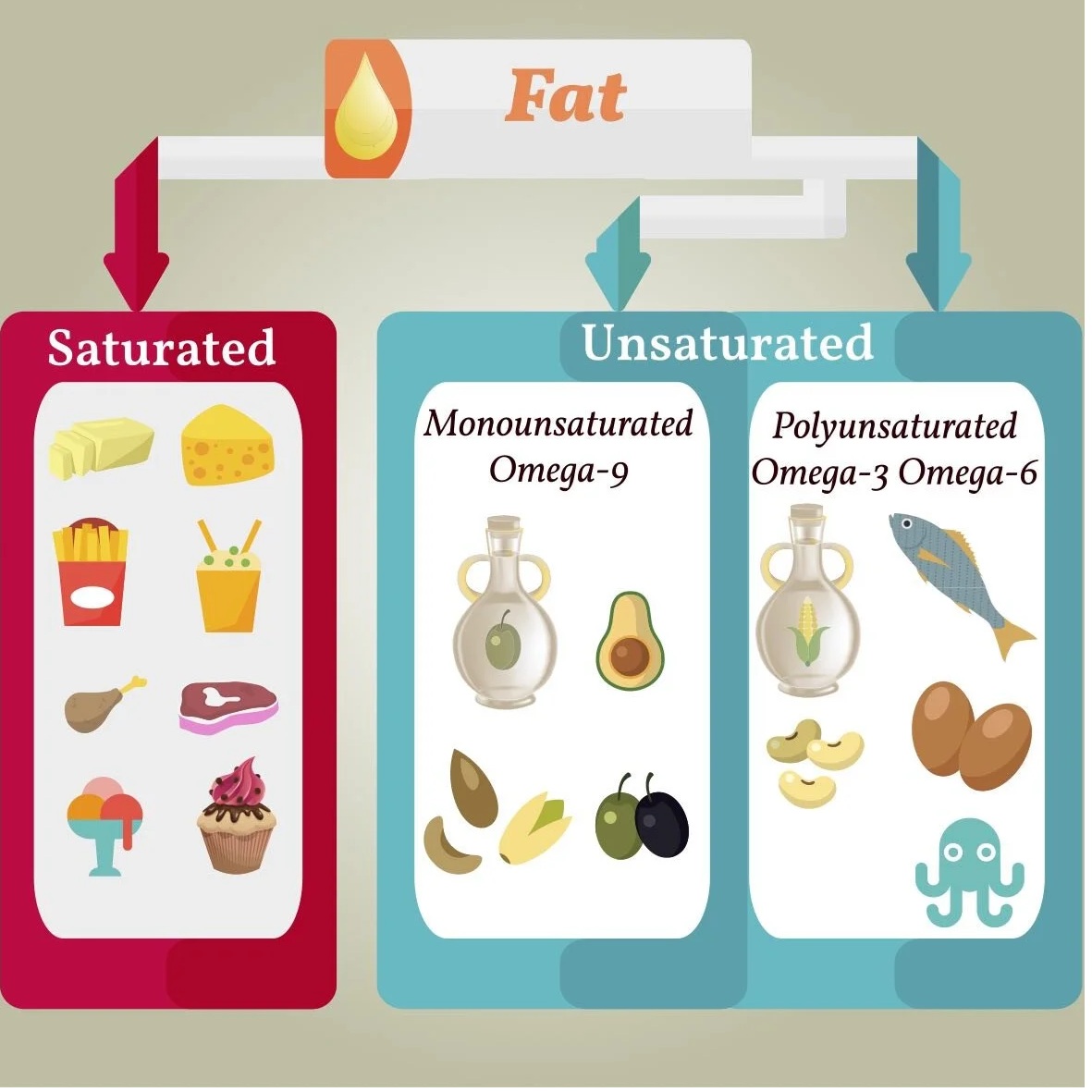
Not all fats affect health in the same way, and some are clearly preferable to others. Unsaturated fats, which are found in foods such as olive oil, nuts, seeds, avocados, and fatty fish, provide essential fatty acids and support heart and brain health. In contrast, diets high in saturated fats and especially trans fats have been linked to increased levels of unhealthy cholesterol and a greater risk of cardiovascular disease. Replacing less healthy fats with sources of unsaturated fats can help improve cholesterol levels, reduce inflammation, and contribute to overall well-being. Rather than avoiding fat altogether, choosing healthier types of fat is an important part of maintaining a balanced and nutritious diet.