Vertical Gardening
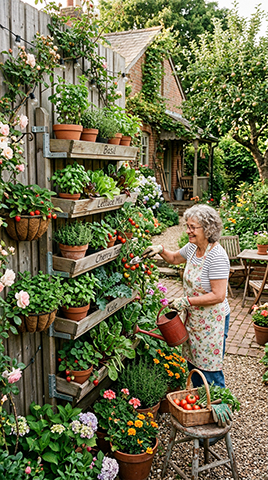 Vertical vegetable gardening is an excellent way to maximize food production in limited spaces while making gardening more accessible and efficient. By training plants to grow upward on trellises, cages, netting, or wall-mounted planters, gardeners can make productive use of patios, balconies, fences, and small backyards. Crops such as tomatoes, cucumbers, beans, peas, and certain squash varieties thrive when grown vertically, often producing cleaner fruit and experiencing fewer problems with pests and diseases due to improved air circulation. Vertical gardens also allow for easier harvesting and maintenance, reducing the need to bend or kneel frequently.
In addition to saving space, vertical vegetable gardening can contribute to greater household self-sufficiency and more efficient use of resources. Plants grown vertically receive better exposure to sunlight, and concentrated growing areas can make watering and fertilizing easier to manage. Creative systems ranging from simple bamboo trellises to stacked planters and hanging pockets allow gardeners to customize their growing spaces according to their needs and budgets. Whether used to supplement grocery purchases or to provide fresh produce for the family, vertical gardening offers a practical and attractive way to grow abundant vegetables in both urban and suburban environments.
Vertical Gardening Setup
Here are some practical tips for getting started with a vertical vegetable garden:
• Choose a sunny location. Most vegetables need at least 6–8 hours of sunlight daily. South-facing walls, fences, patios, and balconies often work well.
• Start with easy climbing crops. Pole beans, peas, cucumbers, cherry tomatoes, and small squash varieties are excellent choices for vertical growing.
• Use sturdy supports. Trellises, cages, cattle panels, netting, bamboo poles, and wall-mounted frames should be strong enough to support mature plants and withstand wind.
• Select compact or indeterminate varieties. Vining tomatoes and compact cucumbers are especially well suited for growing upward.
• Prepare fertile soil. Whether using raised beds, containers, or in-ground plots, enrich the soil with compost to provide nutrients and improve moisture retention.
• Plan plant spacing carefully. Vertical growing allows closer spacing, but adequate airflow helps reduce disease problems and promotes healthy growth.
• Train plants early. Gently tie stems to supports using soft garden ties, twine, or clips before plants become large and difficult to manage.
• Water consistently. Vertical gardens, especially those in containers, can dry out quickly. Drip irrigation or regular deep watering helps maintain healthy growth.
• Mulch around the base. Mulch conserves moisture, suppresses weeds, and keeps soil temperatures more stable.
• Make harvesting easy. Keep taller plants at the back or along fences and ensure you can comfortably reach fruits and vegetables as they mature.
• Grow multiple crops together. For example, peas in spring can be followed by pole beans in summer, allowing one trellis to produce food over much of the growing season.
• Start small. A single trellis or a few containers can provide valuable experience before expanding to larger vertical systems.
With thoughtful planning, a vertical vegetable garden can produce a surprising amount of fresh food while making efficient use of limited space and creating an attractive feature in the yard or on a patio
LINKS