Sprouts
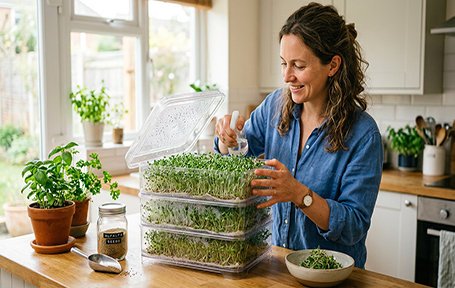 Growing sprouts at home is an easy and inexpensive way to add fresh, nutritious food to your diet year-round. Sprouts such as alfalfa, broccoli, radish, mung bean, and lentil sprouts are rich in vitamins, minerals, antioxidants, and enzymes that support overall health. They require very little space, no garden soil, and only a few days to produce a harvest, making them ideal for apartments or homes with limited outdoor areas. Home-grown sprouts can be produced continuously, providing a reliable source of fresh greens regardless of the season. In addition, growing your own sprouts gives you control over quality and cleanliness while reducing grocery costs and increasing household self-sufficiency.
Growing Sprouts
Getting started with growing sprouts is simple and requires very little equipment. Here are some helpful tips for beginners:
• Choose easy seeds to start with. Mung beans, lentils, alfalfa, broccoli, radish, and clover are popular and reliable choices. Use seeds specifically sold for sprouting to ensure good germination and food safety.
• Use simple equipment. A wide-mouth glass jar with a mesh lid, a piece of cheesecloth secured with a rubber band, or a commercial sprouting tray will work well.
• Rinse and soak seeds properly. Most seeds benefit from soaking for 4–12 hours before sprouting. Follow the recommendations for the specific type of seed.
• Rinse twice daily. Drain thoroughly after each rinse. Excess moisture can encourage mold, while regular rinsing keeps sprouts fresh and healthy.
• Provide good air circulation. Store the jar upside down at an angle so excess water drains away and air can circulate around the seeds.
• Keep sprouts at room temperature. Most varieties grow best between 65°F and 75°F. Avoid direct sunlight during the early stages, though indirect light near harvest can help green the sprouts.
• Harvest at the right time. Most sprouts are ready in 3–7 days. Rinse one final time, remove excess hulls if desired, and allow the sprouts to dry before refrigerating.
• Practice good sanitation. Wash jars and equipment thoroughly between batches and always start with clean hands and fresh water.
• Start small. One or two tablespoons of seed can produce a surprisingly large amount of sprouts, making it easy to learn without wasting seed.
• Experiment with different varieties. Once comfortable with basic sprouting, try mixes or larger seeds such as peas and sunflower seeds for a wider range of flavors and textures.
With only a few minutes of attention each day, you can enjoy a steady supply of fresh, nutrient-rich sprouts year-round, even without a garden or outdoor space.
LINKS