Raised Beds
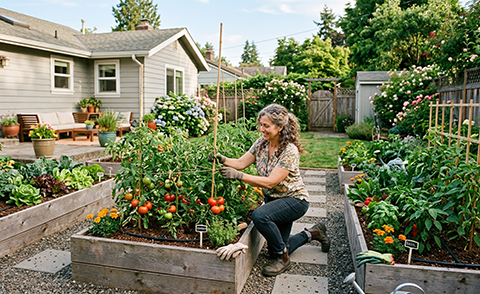 Growing vegetables in raised beds in the backyard is an excellent way to provide fresh, healthy produce for the family while making efficient use of available space. Raised beds offer improved soil quality, better drainage, and easier weed control compared to traditional gardens, resulting in healthier plants and higher yields. Their elevated design also makes planting, watering, and harvesting more convenient and reduces soil compaction from foot traffic. With proper planning, raised beds can produce a variety of vegetables throughout the growing season, helping to lower grocery expenses and providing the satisfaction and security that come from harvesting nutritious food right at home.
Raised Beds Setup
Growing vegetables in raised beds is one of the easiest and most productive ways to garden. Here are some tips to help you get the best results:
Start with Good Bed Dimensions
• Keep beds about 3–4 feet wide so you can reach the center without stepping on the soil.
• Length can vary depending on available space.
• A depth of 10–18 inches is suitable for most vegetables.
Use High-Quality Soil
• Fill beds with a mixture of topsoil, compost, and organic matter.
• Add compost each year to replenish nutrients.
• Avoid compacting the soil by never walking in the beds.
Choose a Sunny Location
• Most vegetables need 6–8 hours of direct sunlight daily.
• Place taller plants on the north side of the bed to avoid shading shorter crops.
Plan Your Spacing
• Follow recommended plant spacing to ensure good airflow and healthy growth.
• Use square-foot gardening or intensive planting to maximize production.
• Group plants with similar water and nutrient requirements together.
Water Consistently
• Raised beds drain well and may dry out faster than in-ground gardens.
• Water deeply rather than frequently to encourage strong root growth.
• Drip irrigation or soaker hoses help conserve water and keep foliage dry.
Mulch the Soil
• Apply straw, shredded leaves, or wood chips around plants.
• Mulch helps retain moisture, suppress weeds, and moderate soil temperatures.
Support Vertical Crops
• Use cages, stakes, or trellises for tomatoes, cucumbers, peas, and pole beans.
• Vertical growing increases yields while saving space.
Feed Plants Throughout the Season
• Heavy feeders such as tomatoes, peppers, and squash benefit from additional fertilizer or compost during the growing season.
• Organic fertilizers, compost tea, or balanced fertilizers work well.
Rotate Crops Each Year
• Avoid planting the same family of vegetables in the same location year after year.
• Rotation helps reduce diseases and insect problems.
Start with Easy Vegetables
• Tomatoes
• Peppers
• Lettuce
• Spinach
• Kale
• Bush beans
• Cucumbers
• Carrots
• Radishes
• Onions
• Herbs such as basil, parsley, and chives
Plant Successively
• Sow lettuce, radishes, and green onions every few weeks for continuous harvests.
• Replace cool-season crops with warm-season vegetables as temperatures rise.
With fertile soil, regular watering, and a sunny location, even a few raised beds can provide a substantial supply of fresh vegetables for a family throughout the growing season.
LINKS