Aeroponics Garden
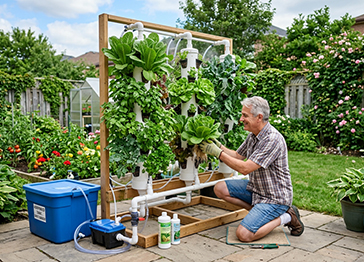 An aeroponics system is an excellent way to supplement your family's vegetable supply by producing fresh, nutritious produce in a compact and efficient manner. Because plant roots are suspended in air and regularly misted with nutrient-rich water, vegetables often grow faster and use significantly less water than traditional gardens. Aeroponic systems can be set up indoors or outdoors, allowing year-round production of leafy greens, herbs, tomatoes, peppers, and many other crops regardless of soil quality or weather conditions. Having an aeroponics system provides a reliable source of fresh vegetables, reduces grocery costs, and gives families greater control over the quality and safety of the food they eat while promoting self-sufficiency and sustainable living.
Aeroponics Setup
Setting up an aeroponics system in a backyard can be very rewarding, but starting with a simple and reliable design is usually the best approach. Here are some basic recommendations:
Start with a Simple System
o Begin with a system that holds 6–20 plants.
o Learn the basics before expanding to larger setups.
o Leafy greens, herbs, and strawberries are excellent beginner crops.
Choose a Good Location
o Most vegetables need 6–8 hours of sunlight daily.
o If summer temperatures are extreme, provide some afternoon shade to protect roots and nutrient solution from overheating.
Use a Reliable Reservoir
o Food-grade plastic containers work well.
o Cover the reservoir to keep out light, which helps prevent algae growth.
o Larger reservoirs maintain more stable water and nutrient conditions.
Provide Backup for the Pump
o Aeroponics depends on frequent misting. Roots can dry out quickly if the pump stops.
o Use a quality pump and timer.
o Consider a battery backup or small UPS for short power outages.
Use Appropriate Misters
o Fine mist nozzles encourage rapid root growth.
o Include filters to prevent nozzle clogging.
o Inspect and clean nozzles regularly.
Monitor Nutrients and pH
o Use nutrients formulated for hydroponics or aeroponics.
o Keep pH generally between 5.5 and 6.5, depending on the crop.
o A pH meter and EC (electrical conductivity) meter are valuable tools.
Provide Support for Larger Plants
Use tomato cages, stakes, or trellises.
Secure vines to prevent tipping and broken stems.
Consider vertical growing to maximize space.
Protect Against Heat and Freezing
o Insulate or shade the reservoir in hot weather.
o Drain or move components indoors during freezing temperatures.
o Keep nutrient solution temperatures around 65–75°F (18–24°C) for best root health.
Keep the System Clean
o Change nutrient solution regularly.
o Sanitize the reservoir and tubing between crops.
o Remove dead roots and plant material promptly to reduce disease.
Select Easy Crops First
o Lettuce
o Spinach
o Kale
o Basil
o Mint
o Cilantro
o Swiss chard
o Strawberries
Plan for Expansion
• Leave room for additional towers or growing chambers.
• Install nearby water and electrical connections.
• Consider rain protection and a small greenhouse or shade structure for year-round use.
LINKS